
You may be asking how does foreign aid work. Governments of richer countries give grants and low-cost loans to poorer ones, directly or through multilateral bodies, with development as the stated goal.
This guide is part of our wider look at global development.
| Item | Value |
|---|---|
| Total aid from OECD Development Assistance Committee members, 2025 (preliminary) | USD 174.3 billion |
| That total as a share of members’ combined national income, 2025 | 0.26% |
| Share of the 2025 fall in aid caused by the United States | 75.1% |
| UN aid target, set in 1970 | 0.7% of national income |
| Minimum grant element for a loan to count as aid | 25% |
Figures come from RTE’s report on the OECD’s preliminary 2025 data and Wikipedia’s overview of official development assistance. Preliminary numbers are revised, so check the source before you rely on them.
What counts as foreign aid?
The technical term is official development assistance, or ODA. It is money from government agencies with the promotion of economic development and welfare in developing countries as the main objective, and on concessional terms.
“Concessional” means softer than market terms. Under the DAC definition, a loan must have a grant element of at least 25 percent to qualify, and most ODA is simply given as grants.
Not every overseas payment counts. Lending to a country on the DAC’s second list, such as Bahrain, is classed as official aid rather than ODA, and flows with a grant element below 25 percent fall under “other official flows”.
Funding channels: how the money moves
By convention, ODA comprises contributions from donor government agencies, at all levels, directly to developing countries (bilateral aid) and to multilateral institutions. The two routes work differently.
- Bilateral aid: one government funds projects, budgets or emergency relief in a recipient country, often through its own aid agency or through contractors and non-profits.
- Multilateral aid: donors pool money in organisations such as development banks or UN bodies, which then decide how to spend it.
- Costs inside the donor country: some spending counts as ODA even though the money never leaves home, such as in-donor refugee costs, which the OECD tracks as a separate line.
In 2025 the OECD’s preliminary data put bilateral ODA at USD 126.4 billion and multilateral ODA at USD 47.9 billion. Bilateral aid is the bigger channel by a wide margin, though multilateral aid gives smaller donors a way to pool their resources.
What aid is meant to achieve
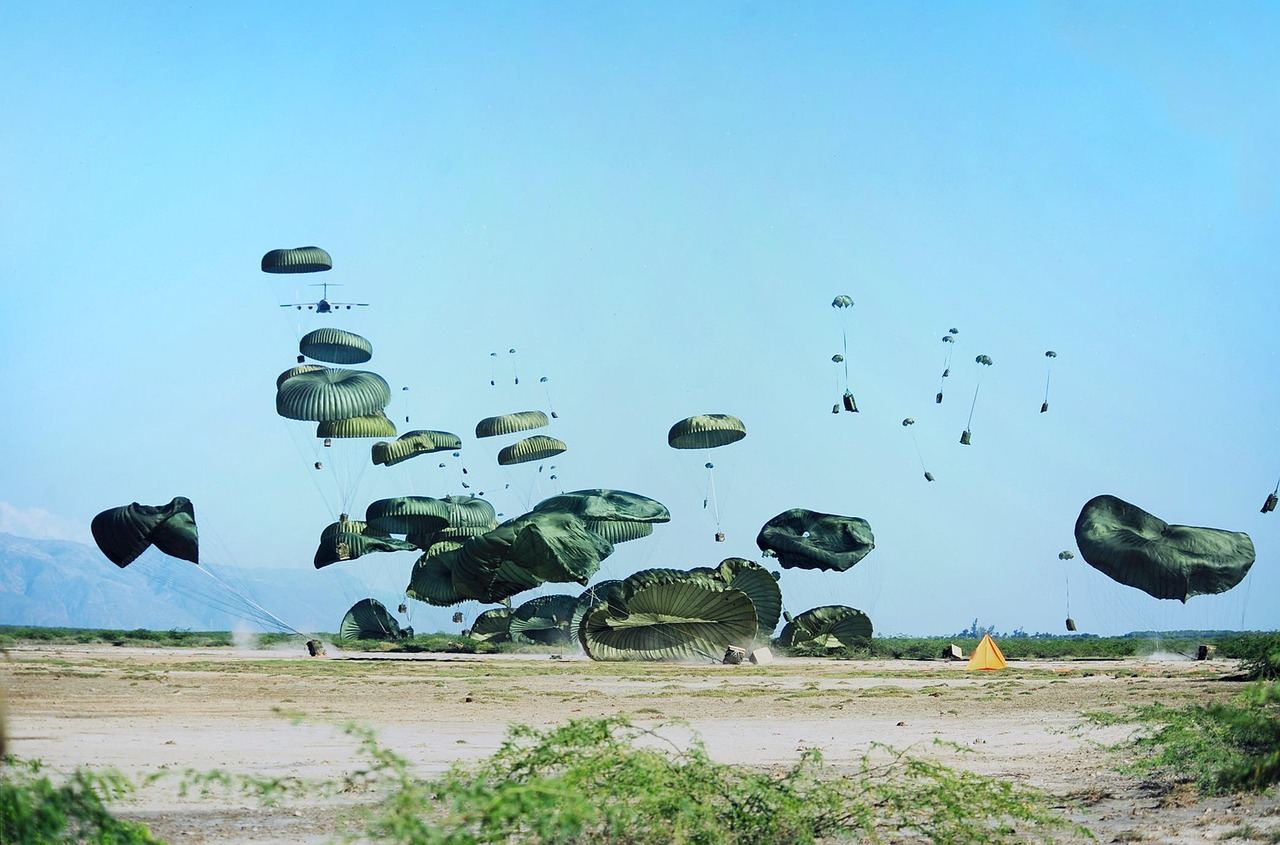
The stated aim is to improve economic and social conditions in developing countries. In practice that covers health, schools, infrastructure, emergency relief and support for government budgets.
Donors and researchers often judge results against broad measures, such as what is the human development index and how it combines income, health and education. Others focus on the extreme poverty definition used to count people living on the lowest incomes. Aid is only one influence on these numbers, so linking a change to a specific aid programme is hard.
The long-standing yardstick for generosity is the 0.7% target. The UN General Assembly formalised it on 24 October 1970, when it called on each economically advanced country to work toward a minimum of 0.7% of its national income.
Why did aid fall so sharply in 2025?
The OECD called the fall the largest annual contraction in the history of ODA. Its preliminary figures, as reported by RTE, show that the United States alone drove three-quarters of the decline, with its ODA falling by 56.9 percent.
Per the same OECD summary, Germany became the largest DAC provider for the first time, at USD 29.1 billion, just ahead of the United States at USD 29.0 billion. Humanitarian aid dropped by 35.8 percent.
These are preliminary numbers as of the OECD’s first release of 2025 data, so later revisions could change them.
Common criticisms of foreign aid
Aid has drawn criticism from both supporters and sceptics. The main arguments are below.
- Tied aid. Per Wikipedia’s overview, tied aid depends on the use of exports from the donor country. The DAC debated its legitimacy for years and in 1992 adopted rules restricting it for lower-income countries.
- Weak coordination. A Brookings analysis of the Paris Declaration argued that most inefficiencies in the aid system show up as bureaucratic failings, such as uncommon arrangements across aid agencies and red tape.
- Limited recipient control. The Paris approach relies on recipient governments leading. The same Brookings analysis noted that several lack the capacity or will to do so, which it tied to most of the 30 to 40 aid recipients that are fragile states.
- Counting questions. Because some donor-country costs count as ODA, critics argue headline totals overstate money reaching people abroad. The OECD’s 2025 summary reported in-donor refugee costs down 22.1 percent.
The Paris Declaration set out five principles: ownership, alignment, harmonisation, results and mutual accountability. According to an overview from the NGO COSV, ownership means developing countries set their own strategies for poverty reduction, improve their institutions and tackle corruption.
Frequently asked questions
Is foreign aid the same as charity?
Show answer
No. Foreign aid is government money, set by budgets and political decisions, whereas charity is voluntary private giving. Some governments do fund non-profits to deliver aid.
Which countries give the most aid?
Show answer
In the OECD’s preliminary 2025 data, Germany was first at USD 29.1 billion, followed by the United States, the United Kingdom, Japan and France. Rankings can shift once final figures are published.
Does every loan to a developing country count as aid?
Show answer
No. A loan must be concessional, with a grant element of at least 25 percent, and the recipient must be on the DAC’s list of aid recipients. Other official lending is counted separately.
Do rich countries meet the 0.7% target?
Show answer
As a group, no. The OECD’s preliminary data put total DAC aid at 0.26 percent of members’ combined national income in 2025, well below the target set in 1970.