You may have seen the term and wondered what is the circular economy. In short, it is a system that eliminates waste and pollution, circulates products and materials, and regenerates nature.
This explainer belongs to the wider topic of sustainability and covers the idea, real examples and the limits you should know about.
| Item | Value |
|---|---|
| Core principles of a circular economy | Three: eliminate waste and pollution, circulate products and materials, regenerate nature |
| Extra annual value in Europe in 2030 (buildings, transport, food) | EUR 900 billion a year |
| Shelf life of fruit and vegetables treated with Apeel | Two to three times longer |
| Plastic-lined containers replaced by Notpla’s seaweed-based coating | 20 million containers |
| Water saved by one DyeCoo machine | 32 million litres a year |
These figures come from the Ellen MacArthur Foundation pages on how the circular economy creates value and on eliminating waste and pollution. Figures can change, so check the source before you rely on them.
From take-make-waste to circular
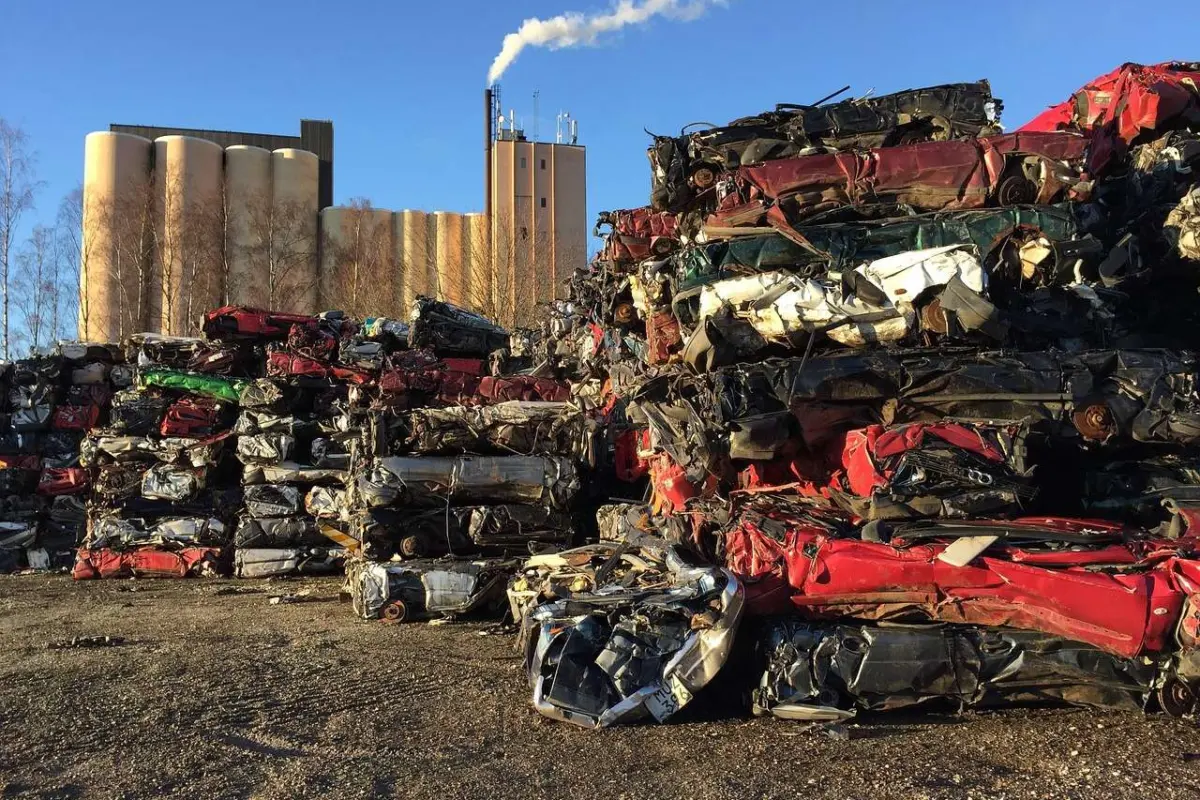
The circular economy is easiest to grasp against what it replaces. The linear economy, sometimes called the take-make-waste economy, is a system where resources are extracted to make products that eventually end up as waste, as the Ellen MacArthur Foundation explains.
That model brought real benefits: for the first time, goods could be mass produced. The same source argues it is also a polluting system that degrades natural systems and drives climate change and biodiversity loss. It ties the damage to the mismanagement of resources and land in industries including agriculture, construction and transport.
Much of the idea’s public profile traces to Ellen MacArthur, who in 2005 became the fastest solo sailor to sail around the world. Five years later she set up a foundation to accelerate the transition to a circular economy, and the Foundation’s own account says her 71 days alone at sea left her with a sharp sense of how finite resources are.
Because that foundation exists to promote the idea, most definitions and figures on this page come from one advocate. Read them as the movement’s own case rather than as neutral measurement, as the Foundation’s mission statement makes its purpose plain.
The three principles of a circular economy
The framework is built on three principles, driven by design, as set out on the Foundation’s page published on 21 August 2024.
- Eliminate waste and pollution. Waste is the result of design choices, and the Foundation notes there is no waste in nature: it is a concept people introduced.
- Circulate products and materials at their highest value. Products can be maintained, shared, reused, repaired, refurbished, remanufactured and, as a last resort, recycled.
- Regenerate nature. Food and other biological materials that are safe to return to nature can regenerate the land, fuelling the production of new food and materials.
Design is the thread running through all of them. A crisp packet is a multi-material flexible plastic package that cannot be reused, recycled or composted, so waste is built in. Treating waste as a design flaw means asking what happens to a product at the end of its life before it is made.
Underneath sits systems thinking, the ability to understand how the parts of a system interact to produce the behaviour of the whole. Michael Braungart, co-founder of the Cradle to Cradle design concept, argues that an economy should aim for effectiveness rather than mere efficiency, using the cherry tree, whose outputs become inputs for other processes, as his model (Ellen MacArthur Foundation deep dive).
Circular economy examples in practice
The Foundation’s page on eliminating waste, published on 21 August 2024, profiles companies that have redesigned products and packaging. The results below are company-reported, so treat them as illustrations rather than independent audits.
- Notpla makes seaweed and plant-based alternatives to plastic packaging. Its seaweed-based coating for takeaway packaging has replaced 20 million plastic-lined containers (source).
- Apeel is an edible, plant-based coating that slows the two main causes of spoilage, water loss and oxidation. Fruit and vegetables treated with it stay fresh two to three times longer, without the need for plastic packaging (source).
- Lush has redesigned some liquid personal care products as solid formulations that replace liquid products in plastic bottles.
- DyeCoo dyes textiles with carbon dioxide instead of water in a closed-loop system. One machine can process 800 tons of polyester per year, saving 32 million litres of water and avoiding 160 tons of chemicals (source).
DyeCoo’s equipment needs higher capital investment than conventional dyeing. The company reports lower operating costs from short batch cycles, efficient dye use and avoiding wastewater treatment, according to the same Foundation page.
How does the circular economy create value?
For businesses, the value is reduced costs of buying raw materials and making new products, even if more materials are used upfront to make products durable. Customers get goods at lower prices, and the environment and society gain from lower greenhouse gas emissions, cleaner water and fewer landfills, according to the Foundation’s page on how value is created.
One analysis it cites found that a circular economy for buildings, transport and food in Europe could create EUR 900 billion a year more than would be created without it in 2030. That figure mixes cost savings to businesses and customers with wider benefits to society and the environment (source).
Digitally enabled business models help capture that value. The same page gives these examples for durable goods:
- On-demand car services
- Subscription models for clothes
- Remanufacturing jet engine components before they wear out
In food, regenerating nature is key. Designing food to come from regenerative farming systems can increase farmers’ profits and food output while reducing pollution, storing carbon in the ground and helping biodiversity, and designing out food waste cuts both the cost of producing food and the land needed for agriculture (source).
Challenges and limits to keep in view
The headline numbers are projections. The Europe estimate for 2030 comes from analysis the Foundation cites, and its own page admits that wider benefits do not always have a price, so their economic value is estimated rather than observed (source).
Payoffs can also be uneven in time. The Foundation says some benefits might not help a company’s bottom line in the short term, and DyeCoo-type equipment carries higher up-front capital costs than conventional machinery (value page, waste page).
Some problems also resist simple fixes because they are systemic. The Foundation’s systems deep dive says ocean plastic results from several interacting causes, including:
- Reliance on single-use plastics
- Lack of consumer education and awareness
- Poor product design
- Business practices and incentives
- A lack of finance and infrastructure
Its conclusion is that if the problem is not understood, an adequate solution cannot be reached, which is why the framework leans on systems thinking. No single company redesign settles that.
If you want to see how fairness fits when whole industries change, read about what is a just transition. For how this sits beside the wider climate response, see climate adaptation vs mitigation.
Frequently asked questions
What is the difference between a linear and a circular economy?
Show answer
A linear economy extracts finite resources, makes products and throws them away. A circular economy aims to keep materials in use by designing out waste, circulating products and regenerating nature, as the Foundation describes on its linear economy page.
Is recycling the same as a circular economy?
Show answer
No. The Foundation lists maintaining, sharing, reusing, repairing, refurbishing and remanufacturing before recycling, which it calls a last resort (source).
Does the circular economy only apply to packaging?
Show answer
No. The Foundation describes designing buildings, cars and electronics to be used longer, reused many times, remanufactured and in the end recycled (source). Its waste page also covers textiles, through waterless dyeing.
Can the circular economy help with climate change?
Show answer
The Foundation calls the linear model a driver of climate change and lists lower greenhouse gas emissions among the benefits of a circular approach (source). Treat that as the framework’s stated aim: the sources used here do not quantify the emissions cut.